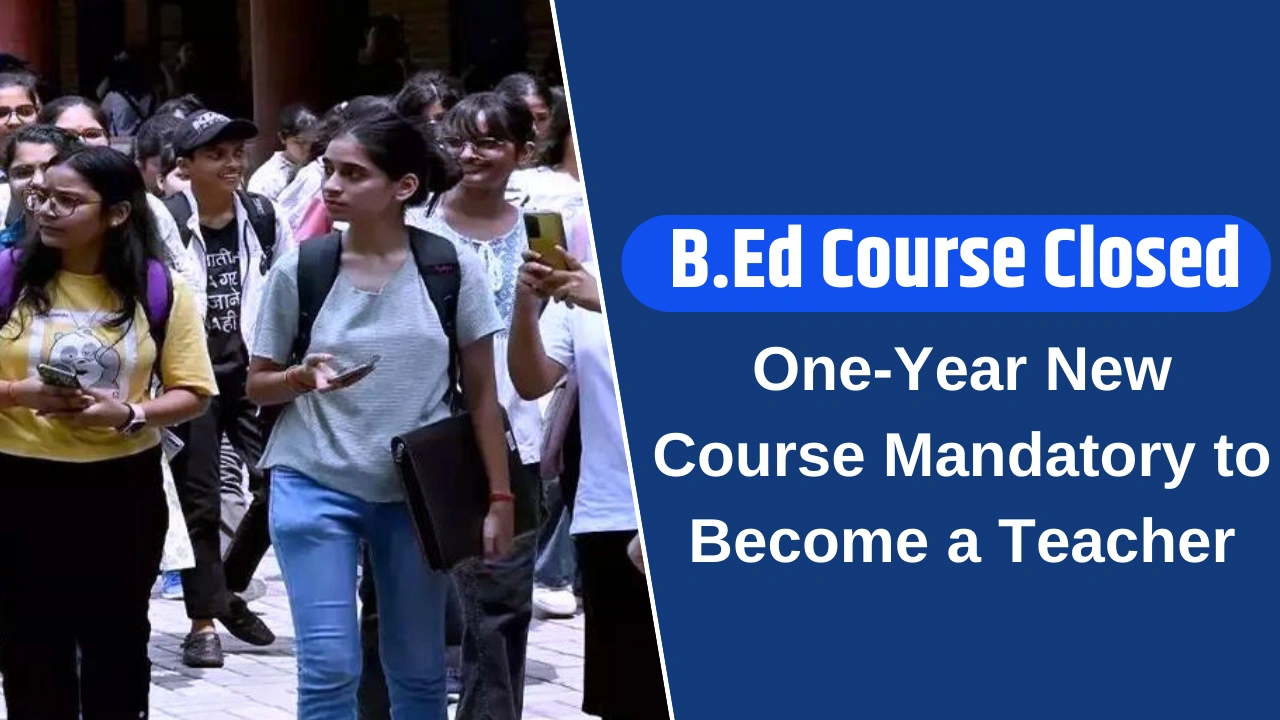
The announcement that the B.Ed Course Closed has sent shockwaves through the education landscape in India. Thousands of aspiring teachers are left asking the same question: what comes next? If you have been planning to pursue a B.Ed degree, it is important you understand exactly how this new change affects your path toward becoming a teacher.
The B.Ed Course Closed decision is more than a policy update. It is a complete overhaul of how future teachers will be trained. Starting from the 2026–27 academic session, the traditional two-year B.Ed program will no longer be available. It will be replaced by a more compact and intensive one-year program designed to build better classroom-ready educators. This article will break down what this means for you, including new eligibility criteria, the importance of practical experience, and what institutions you can trust moving forward.
B.Ed Course Closed: What This Means for Future Teachers
When you hear that the B.Ed Course Closed, do not assume it is a step back. In fact, it is a move forward in upgrading teacher education in India. The change reflects a push to make teaching more hands-on, more focused, and more effective. With the traditional course being discontinued, a new one-year training program is stepping in that will be far more practical and skill-oriented.
This new program is not for everyone. It is tailored specifically for students who already hold either a four-year undergraduate degree or a postgraduate qualification with at least 50 percent marks. What makes it even more relevant is the six-month mandatory internship, which gives real-world experience in the classroom. This shift also helps filter out low-quality, unrecognized teacher training institutes and makes room only for serious, well-prepared future educators.

Overview Table: Glance at Major Changes in Teacher Education
| Key Update | Details |
| Traditional B.Ed Program | Discontinued from the academic session 2025 |
| New Course Duration | One-year B.Ed course starts from 2026–27 |
| Required Educational Background | Four-year degree or postgraduate with minimum 50% marks (45% for EWS) |
| Internship Duration | Six months of hands-on teaching in NCTE-recognized schools |
| Dual Course Enrollment | Not allowed under new rules |
| Online Learning Restrictions | Only theory allowed online; practical must be offline |
| Focus Area | Real classroom experience and practical teaching |
| Recognition Rule for Colleges | Only NCTE-recognized institutions can offer the course |
| Age Limit | No upper age limit for applicants |
| Reform Objective | Enhance teaching quality and improve classroom readiness |
Single Course Rule Brings Clear Academic Focus
One of the most impactful changes from this reform is the ban on pursuing multiple teaching courses simultaneously. Many students used to enroll in both B.Ed and D.El.Ed, thinking it would improve their chances. But this often led to divided attention, added stress, and lower-quality learning.
Now, students are required to focus on just one course. This move ensures deeper engagement and better retention of teaching methods and theories. It simplifies the academic journey, promotes mental well-being, and helps you build a stronger foundation as a future educator.
Mandatory Internship to Strengthen Classroom Skills
A standout feature of the new one-year course is the six-month internship that every student must complete. This is not optional. It is designed to help you develop essential teaching skills by working alongside experienced professionals in real school settings.
During your internship, you will interact with students, manage classrooms, and deliver lessons under guidance. This exposure will build your confidence and prepare you for the realities of full-time teaching. It bridges the often-missing link between theory and actual practice, making the learning experience much more complete.

Strict Action Against Unrecognized Teacher Training Colleges
In the past, many students were caught off guard when their degrees were rejected due to their colleges not being recognized by NCTE. This issue has now been firmly addressed. Under the new guidelines, only institutions that are officially recognized by NCTE will be allowed to offer teacher training courses.
This is a protective measure to safeguard students from wasting time and money. It also helps ensure that all future teachers are trained under a consistent, approved standard, thereby raising the overall quality of education.
Limits on Online Classes in Teacher Education
While online learning has its benefits, teacher education is not something that can be learned entirely behind a screen. The new rules make it clear: only the theoretical parts of the B.Ed curriculum can be completed online. All practical aspects, including internships and classroom practice, must be done offline.
This distinction matters because teaching is a profession that depends heavily on soft skills, emotional intelligence, and real-time interaction. Watching videos or attending virtual lectures cannot replace hands-on experience when it comes to managing a classroom.

New One-Year B.Ed Course from 2026–27
The launch of the one-year B.Ed program is the centerpiece of the recent reform. This course is structured specifically for academically strong candidates. You need to have either a four-year undergraduate education or a postgraduate degree to apply.
The course will run across two semesters and will include both theory and practice. No upper age limit means working professionals or those making a career switch into teaching can also benefit. The aim is to create highly capable teachers in a shorter period without compromising quality.
Improving the Overall Quality of Teacher Training
At its core, the decision to close the traditional B.Ed course is about improving education across the board. By focusing more on real-world skills, cutting down on unnecessary academic pressure, and enforcing strict rules for institutions, the reform aims to produce well-rounded, effective educators.
The long-term goal is simple: better teachers make better students, and better students create a better society. The move may be tough for some at first, but it sets the foundation for a more competent and inspiring teaching force.

FAQs
Q1. What does the B.Ed Course Closed mean for students?
It means the old two-year B.Ed program will no longer be offered, and a new one-year course will be introduced from 2026–27.
Q2. Who is eligible for the new one-year B.Ed course?
Only those with a four-year undergraduate degree or a postgraduate qualification with at least 50 percent marks can apply.
Q3. Can I study two teacher training courses together now?
No, the new rule allows only one course at a time to avoid divided focus and poor learning outcomes.
Q4. Are online B.Ed degrees still valid?
Only the theory part of the course can be done online. Practical elements like internships must be completed offline.

Q5. How can I check if a college is recognized by NCTE?
Visit the official NCTE website to verify the approval status of any teacher training institution before enrolling.